347-727-7200
 Get Consultation
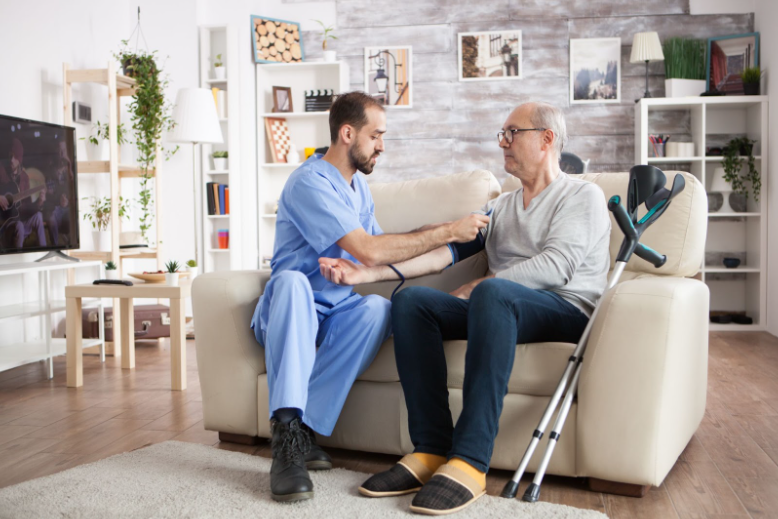
Senior home health care helps older adults safely, accurately, and consistently take chronic medications at home. In elderly patients with chronic health issues, drug management does not only involve taking medications but also avoiding complications and hospitalization, therefore ensuring their independence.
This blog discusses the challenges seniors face in managing their medications, how Senior Home Health Care supports safer routines, and when families should consider professional help.
As people age, they are more likely to develop chronic conditions such as heart disease, diabetes, arthritis, respiratory disorders, or neurological conditions. Many of these illnesses require taking several medications each day and, often, at different times with different instructions.
Age-related changes can make this process difficult. For example, declines in memory may result in omitted doses; poor vision makes labels hard to read; loss of hand strength can impede opening containers; and side effects may lead to inconsistent use. Over time, what seems like negligible oversights can have profound health consequences.
This is where Senior Home Health Care becomes essential, offering structured support that helps seniors safely and consistently follow medication plans and take their medications as prescribed.
One of the most common causes for seniors experiencing avoidable health complications is improper use of medication. Serious consequences can be caused by taking medications incorrectly.
Common risks include:
Many of these risks could be avoided through regular monitoring and routine support at home.
Home health care offers hands-on care, which embodies safety, routine, and accountability.
Caregivers assist seniors in adhering to their medication schedules, thereby preventing missed or incorrect doses. A consistent routine enhances adherence and mitigates stress.
While the caregivers do not prescribe medications, they can help with non-invasive tasks such as oral medication reminders, eye drops, or topical applications, where allowed. Such support eliminates confusion and helps seniors feel confident.
Caregivers who see seniors regularly can identify early signs of adverse reactions, such as dizziness, swelling, changes in appetite, or unusual fatigue. These observations can be reported promptly to families or healthcare providers.
Medication plans are kept accurate and up-to-date with the support of home care professionals who communicate with seniors, their families, nurses, doctors, and case managers.
Medication management requires more than a reminder each day. Seniors with complex medical needs benefit from professional oversight and care planning.
Nurse evaluations help assess:
Engaging with a reputable home health nurse agency guarantees responsible medication management and necessary adjustments. This significantly decreases the likelihood of avoidable complications.
Certain seniors require more extensive care as a result of medical conditions, mobility restrictions, or cognitive decline. In these instances, it is essential to integrate medication management into daily care routines.
Home-based support can include:
This approach allows seniors to remain at home while receiving proper medical and personal support.
Tri-Med Home Care offers in-home services designed to help the aged safely take chronic medications and remain self-reliant. Caregivers are trained to aid in medication reminders, routine compliance, and daily observation of possible side effects or changes in condition. Our skilled nurses, physicians, and case managers are involved in coordinating care to ensure continuity and accuracy.
We give much attention to communication. That is why we offer care services in various languages, including English, Spanish, Hindi, Punjabi, Gujarati, and Creole, to help seniors have a clear picture of their medication routines.
Home care support may be appropriate if a senior:
Early support from a reputable home health nurse agency or service can prevent medication complications before they become an emergency.
Medication control is not purely physical; it also influences emotional state. The elderly, who are vulnerable to complicated schedules of medicines, might develop anxiety, frustration, or lack of confidence.
The presence of an altruistic and respectful caregiver can reduce stress and make the seniors feel safer. Peace of mind among families is also experienced because there is certainty that medications are being under proper care.
Managing chronic medications becomes more challenging with age, but seniors do not have to manage it all by themselves. Continuous in-home support allows medication routines to become less stressful and safer to handle.
Senior home health care can also help older adults with chronic diseases improve their health and independence, as well as their quality of life.
If you or a loved one requires assistance taking medications at home, meeting with a care coordinator can help you explore supportive care choices that are appropriate for your needs.